IN BED WITH MANU GARCÍA
By Javier Díaz-Guardiola
Having “a dog day” is not the same as having “a dog’s day”. In this case, a simple “s” makes the difference. Because it is not the same to have everything so unbearable that not even one can stand it, than to enjoy a day in which the individual can allow himself the luxury of indulging in ‘dolce far niente’ and wallowing in his laziness.
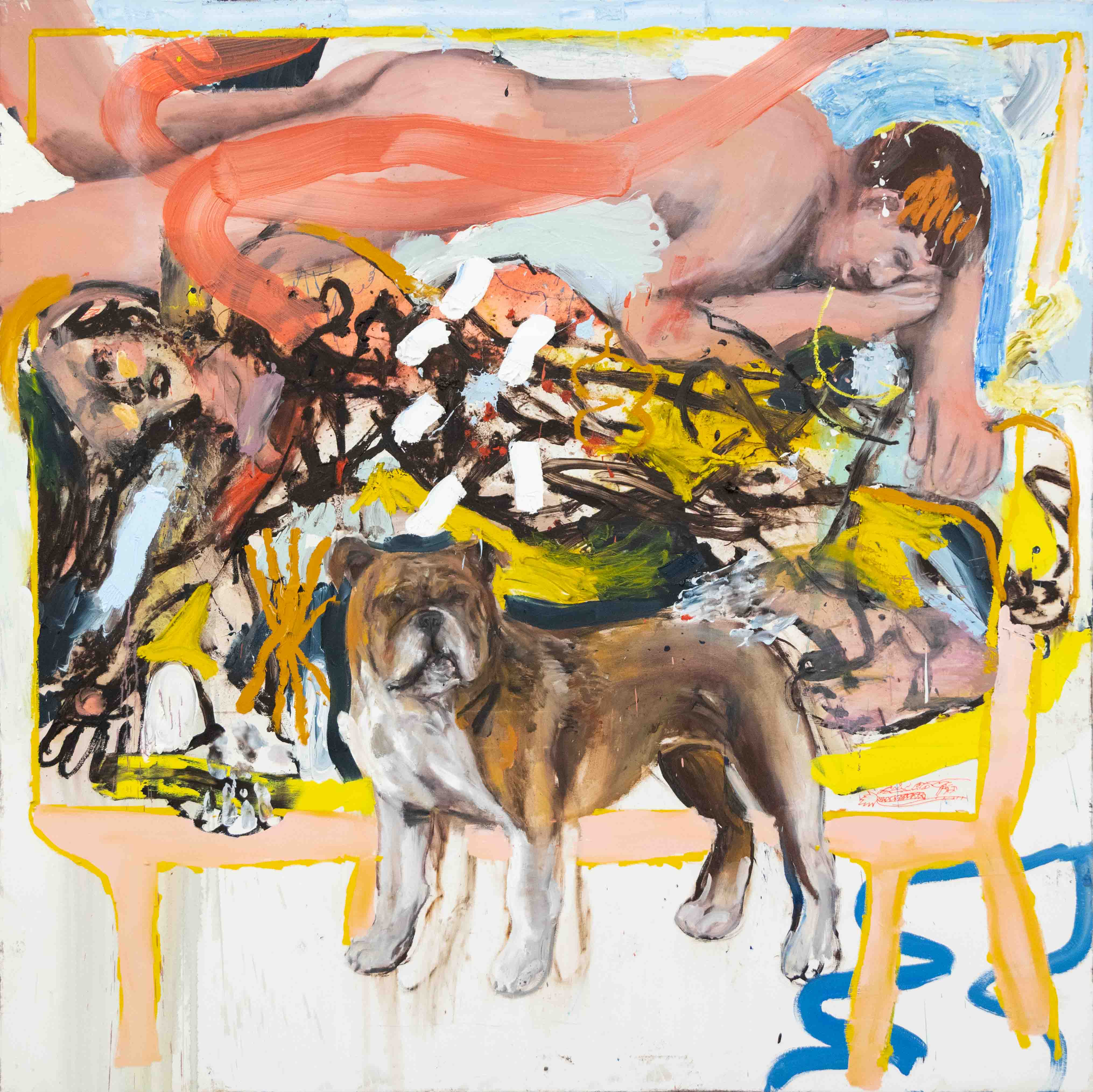
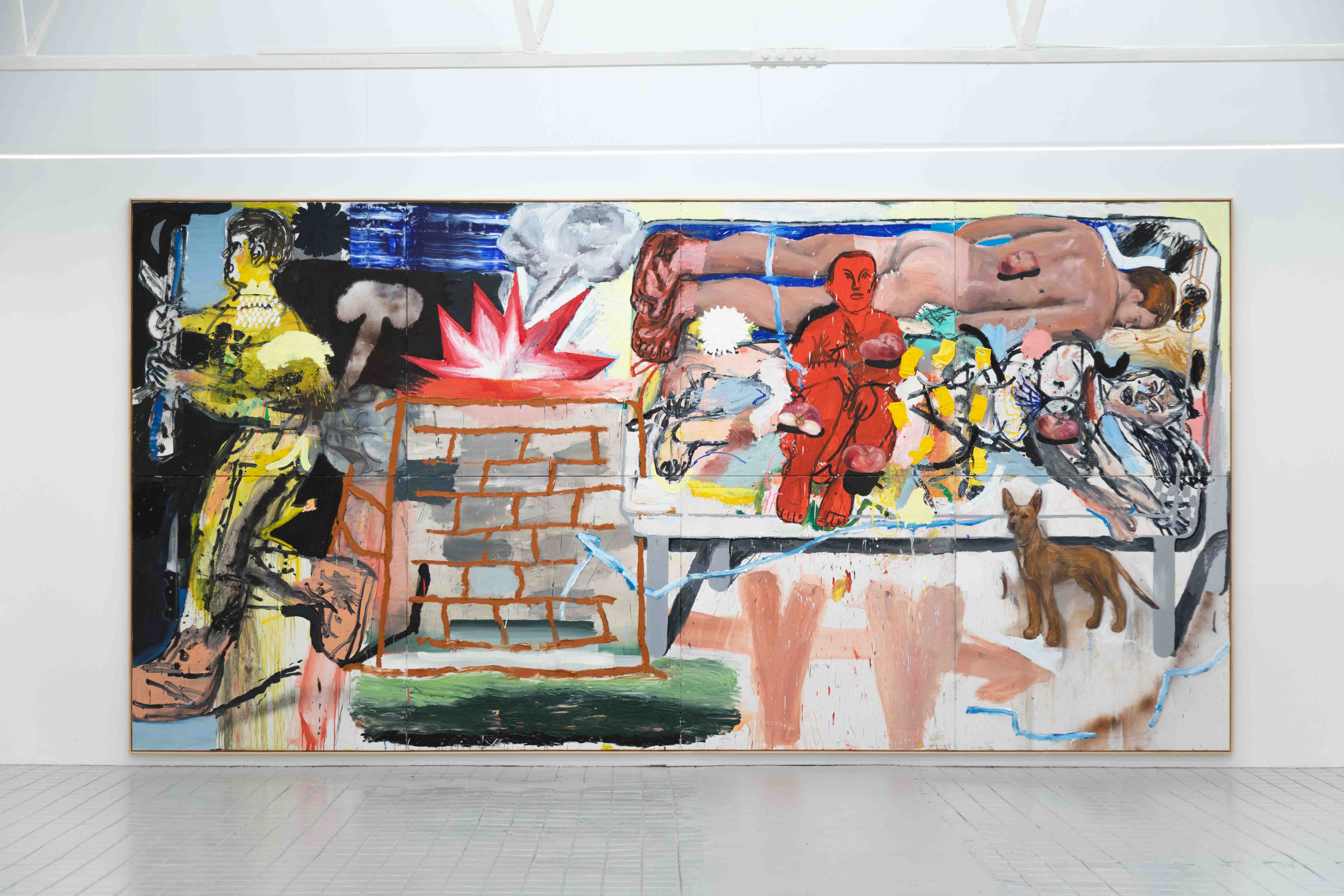
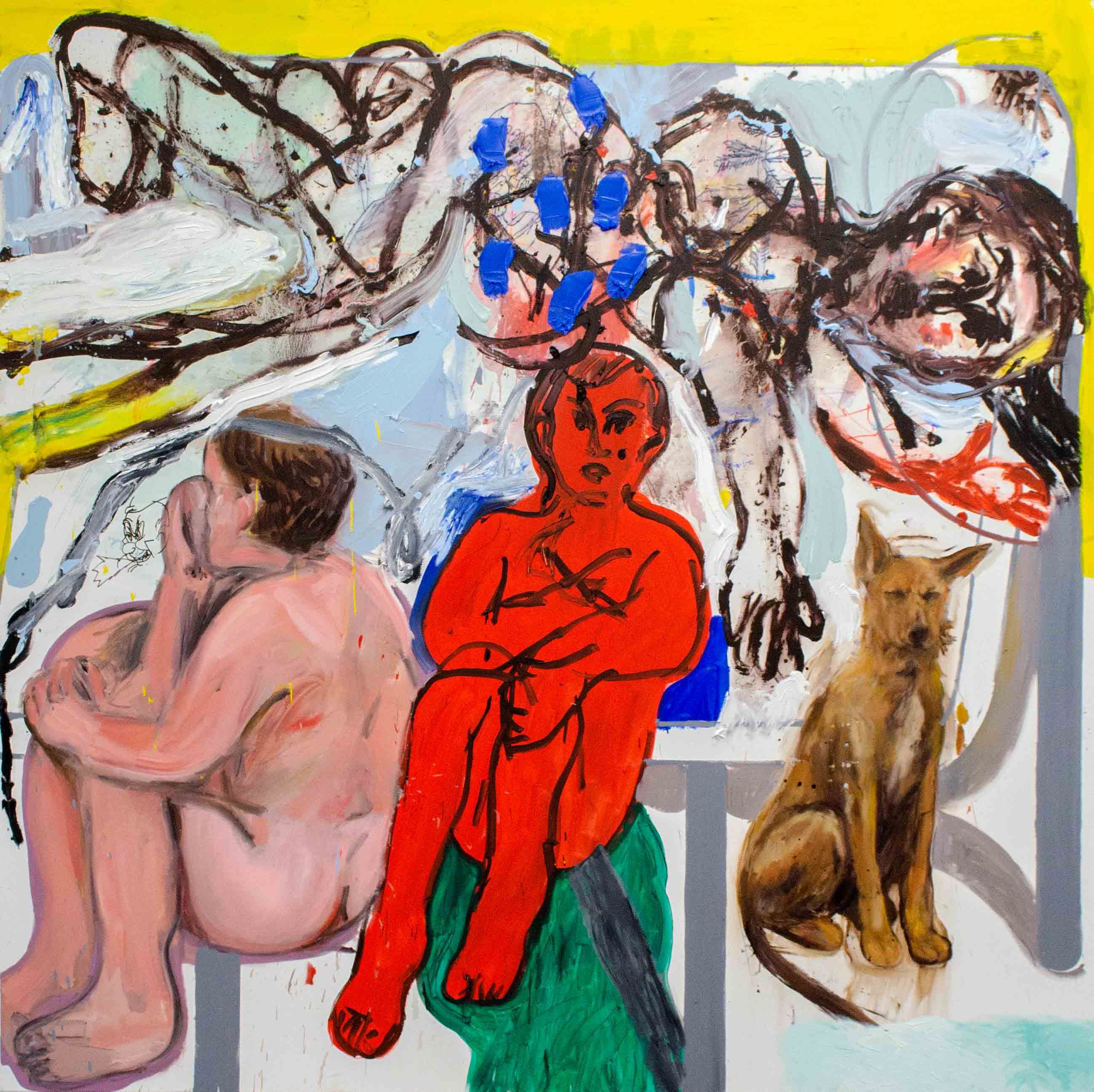
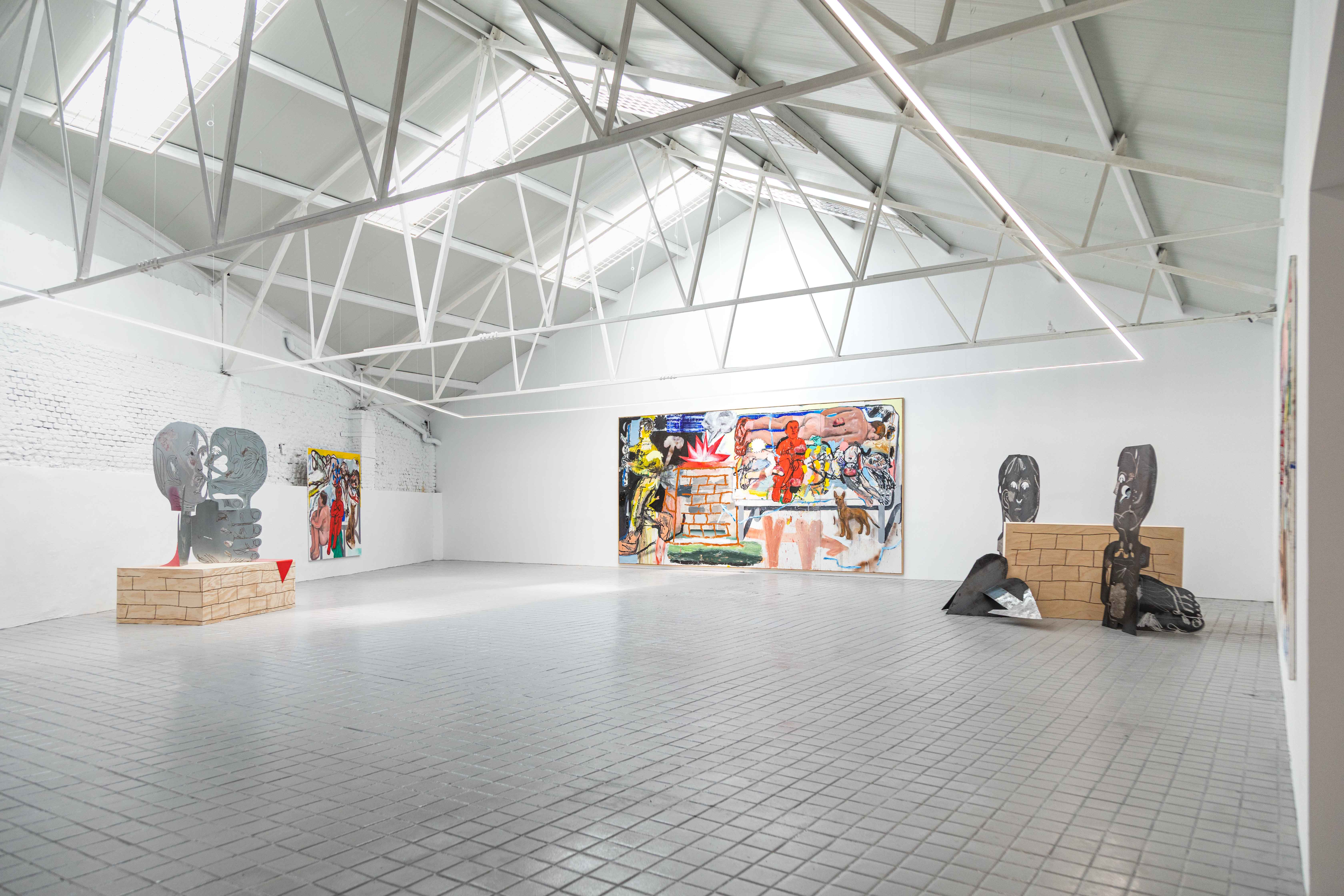
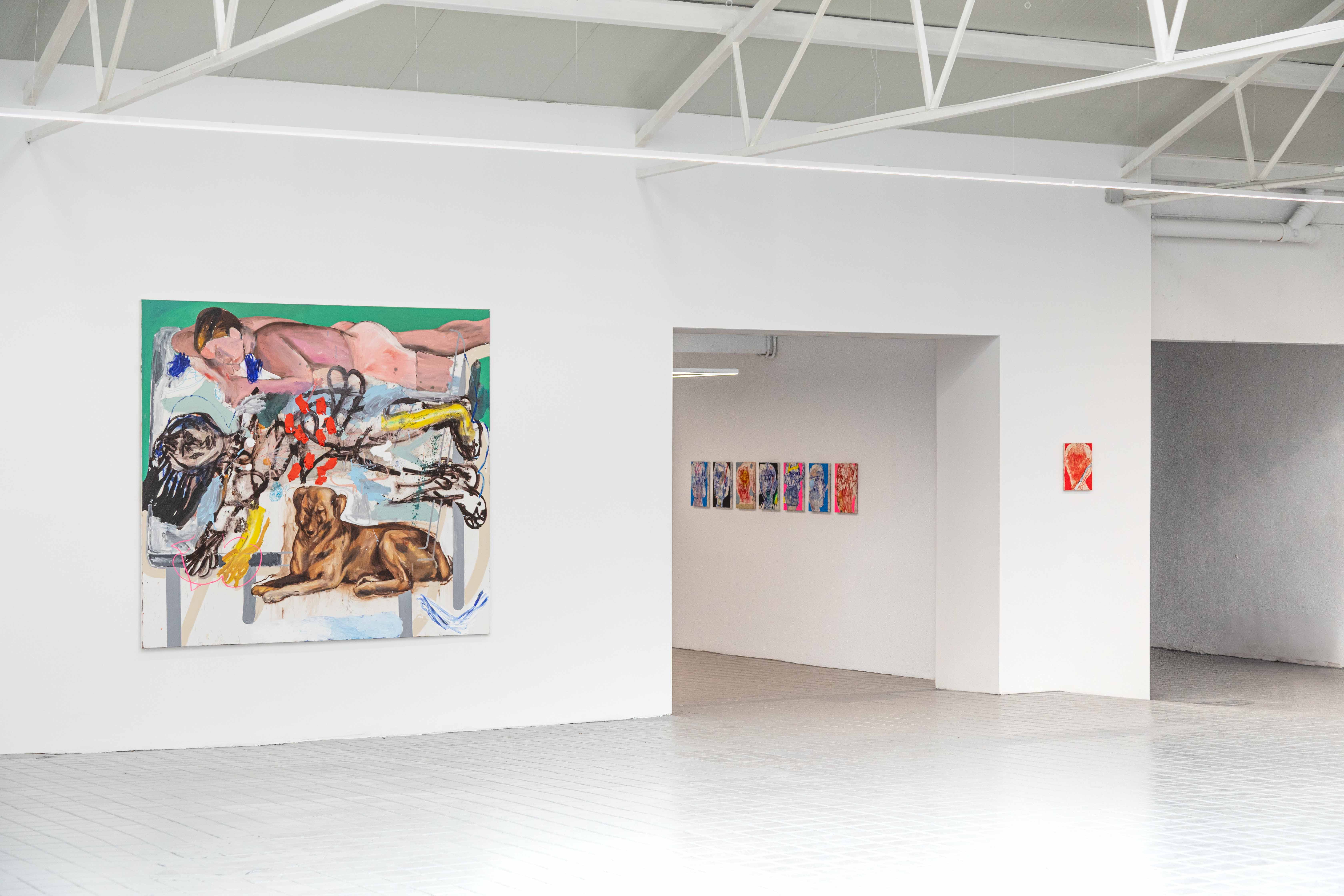
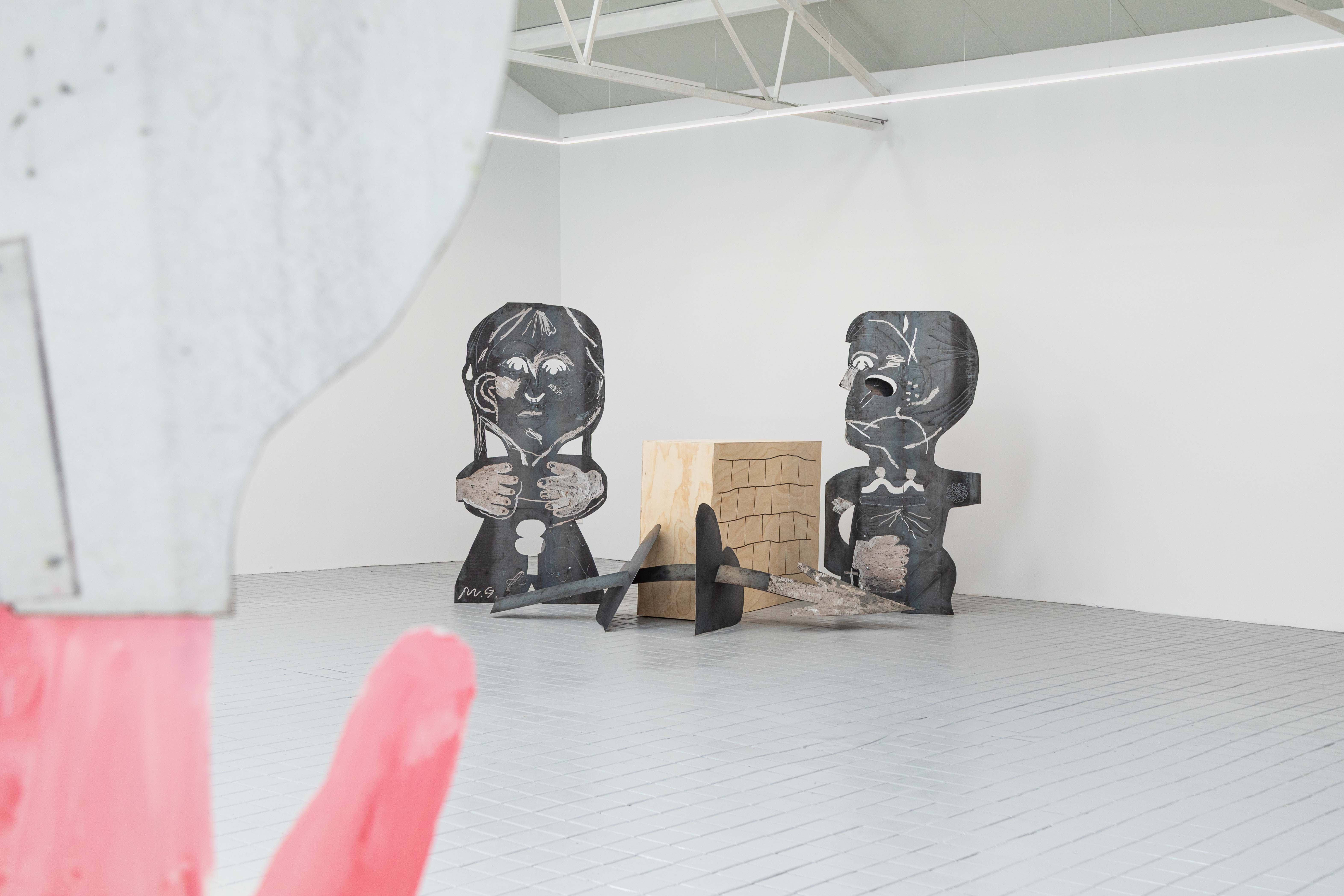
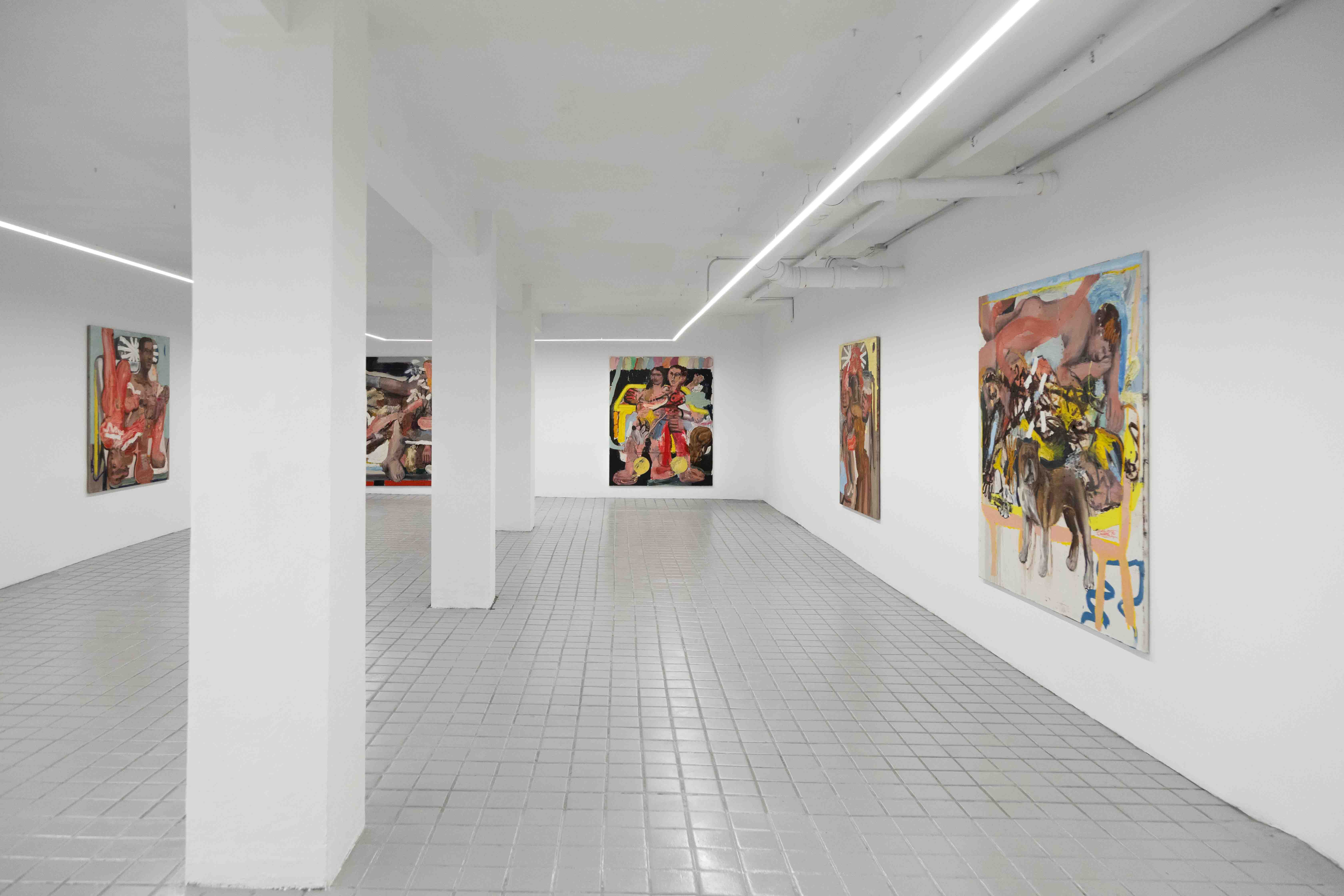
The philosophy behind the title of this exhibition, ‘Dog Bed Games’ or ‘Juegos de cama para perros’ (Bed Games for Dogs), also the name of one of the main works, could be included in the latter situation. Unlike previous occasions with its author, Asturian Manu Garcia (Oviedo, 1994), the reference does not lead to any book or song. But don't be fooled: the winks to the History of Painting (The School of London, Matisse, Goya, Barjola, Paula Rego; the dog in ‘Las Meninas’, figures by Hockney, Matisse; De Kooning, the comic...), will be constant and you will have to be the only ones responsible for their identification.
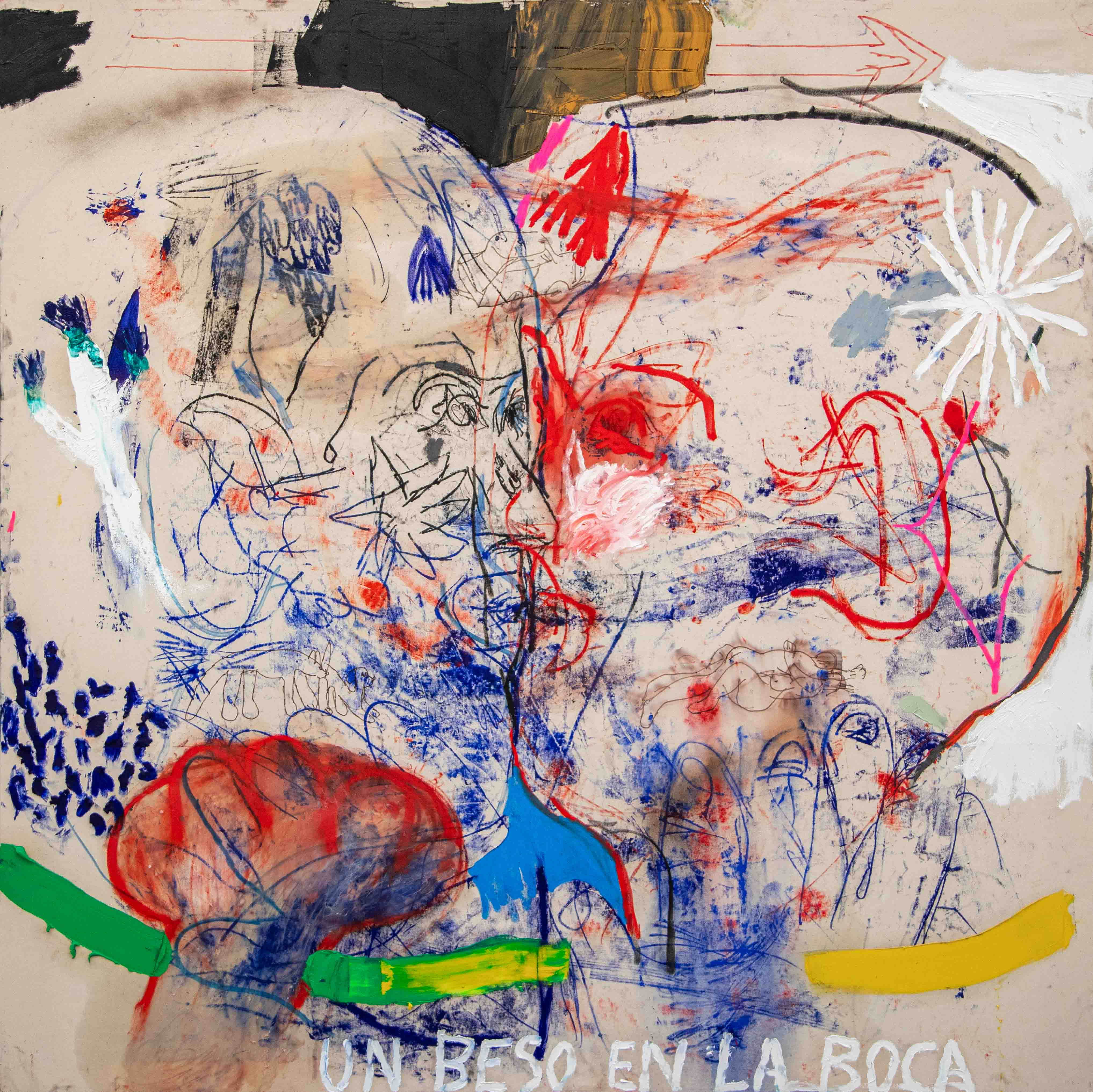
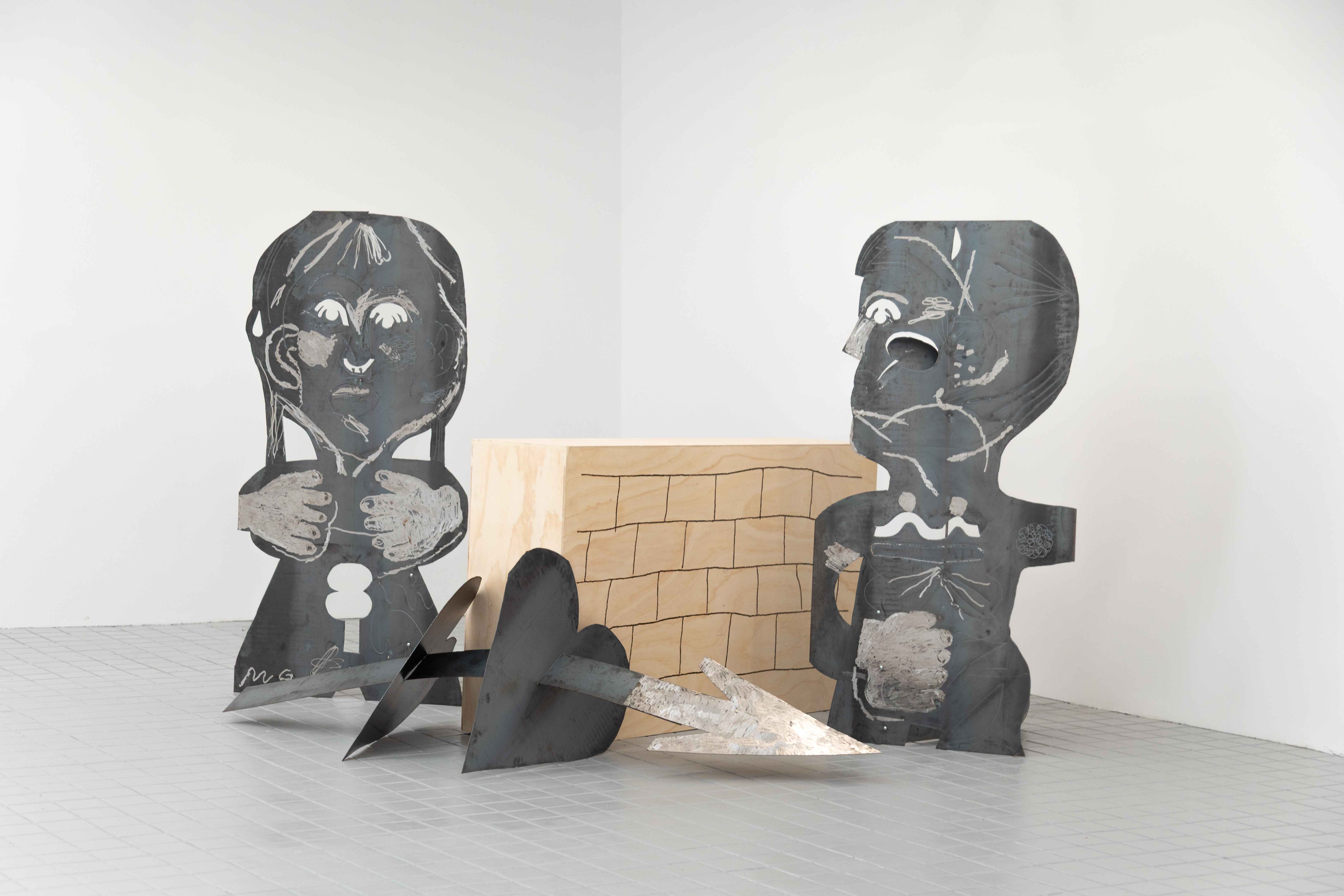
Precisely literature and cinema are characterized by telling linear stories, at least with a presentation, knot and denouement, although these parts are offered in disorder. In the pieces (and I say pieces, because now sculpture is added to the canvases) of Manu García, many things happen at the same time in the same context, the result of an intuitive and visceral work that is born from the pit of the stomach, and in which the results can be polysemic or have no concrete meaning at all, although they can be the stimulus of a lot of sensations.
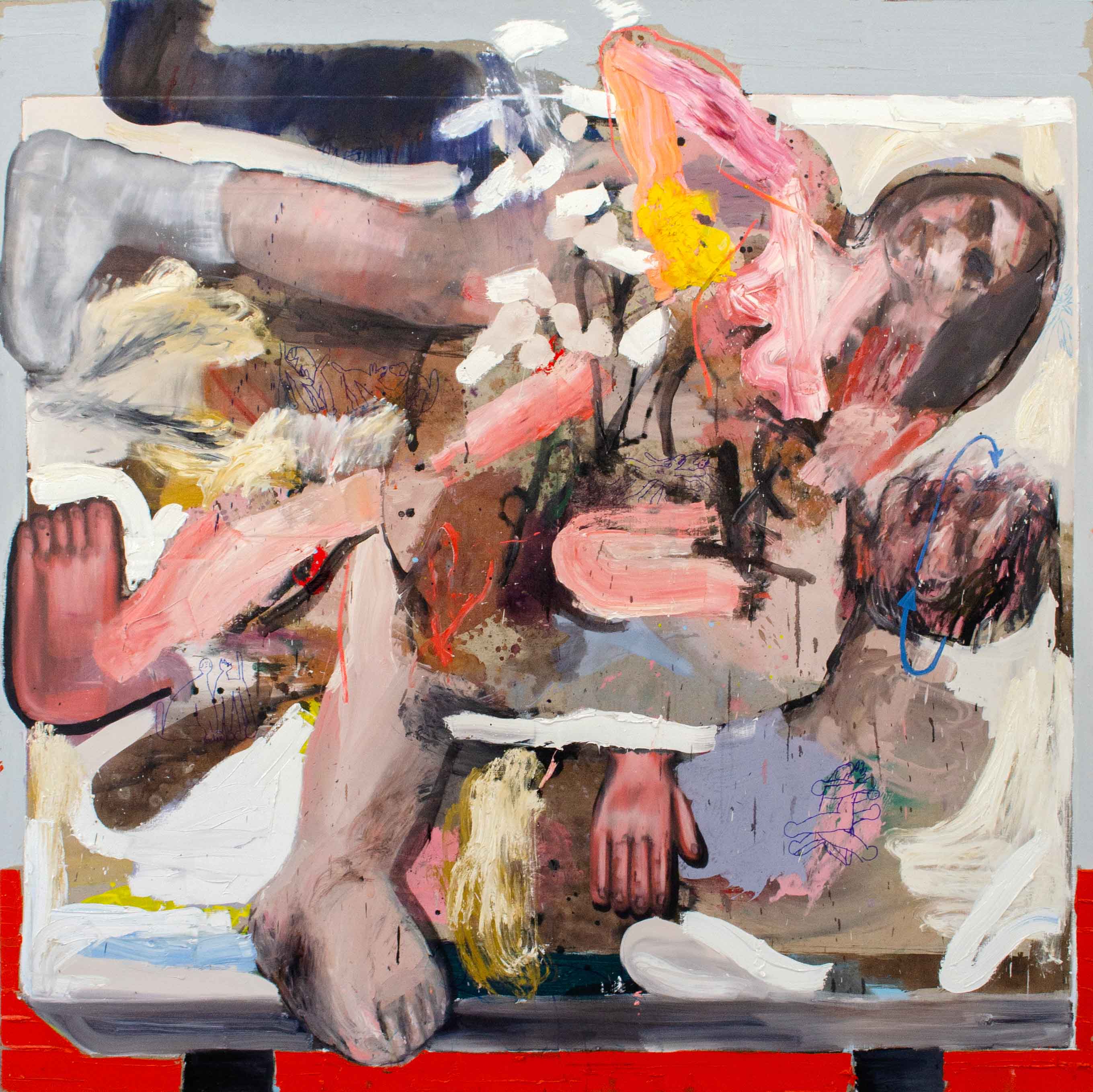
From the edge (or rather, the inside of the bed) it is perhaps easier to assume the contradiction in which we are immersed: our role in an increasingly individualized world (in which the mantra of ‘self-care’ reigns) that requires us to position ourselves before dramatic situations (wars, abuses, social injustices...) that occur at every moment. Manu assumes the point of responsibility that each one of us should have, and that idea that hovers over art and to which a certain forced contribution is demanded. However, he cannot avoid that he is much more affected by the relationships with the people he is close to, the ones he develops with objects, his belongings, his dog; issues much less important for the future of the planet but from where he inevitably develops his answers and takes sides. Therefore, look for more intimate responses in his painting, more silent if you will, in which the intention of painting or the craft of art is assumed as another political position. His is a good example of projection from the micro to the macro.
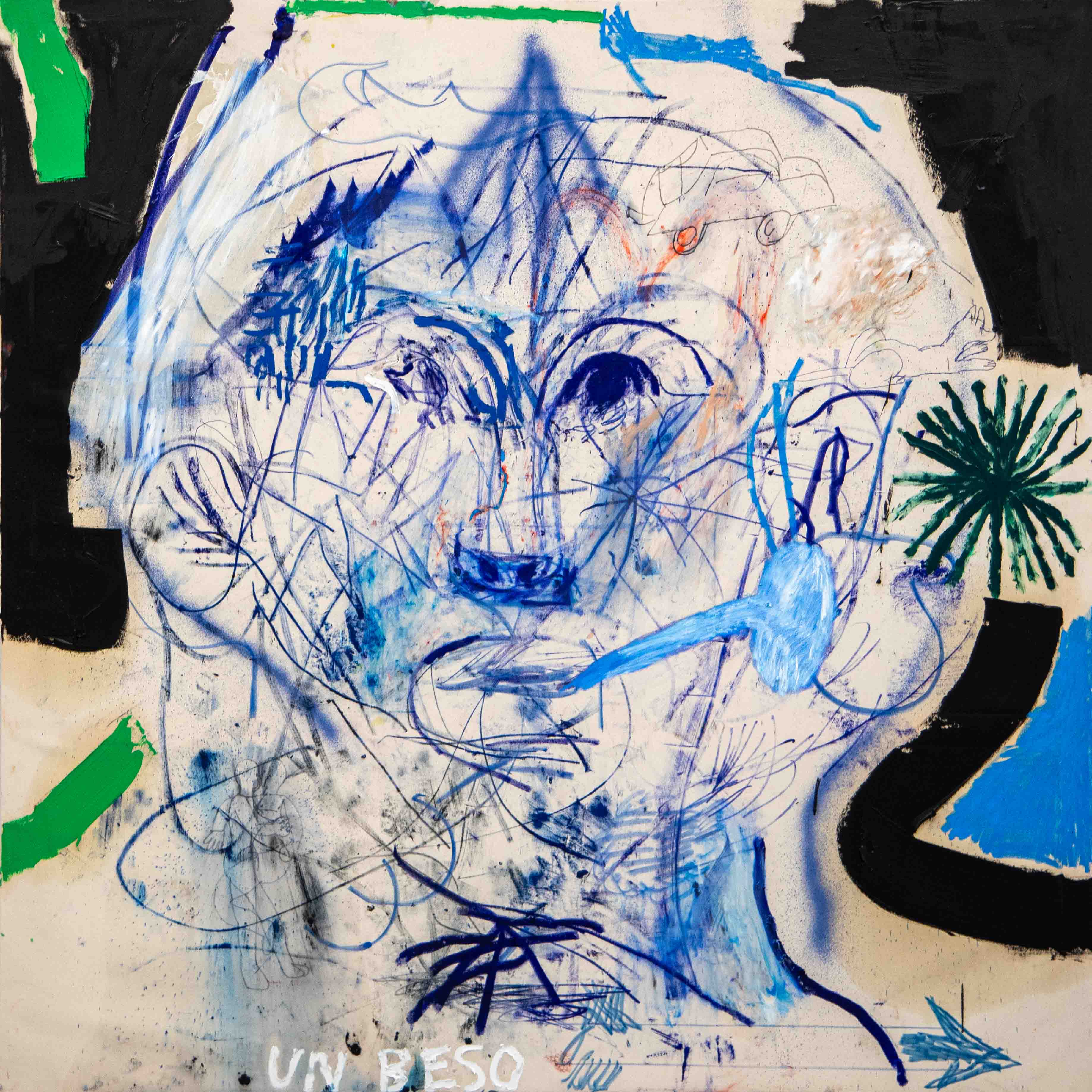
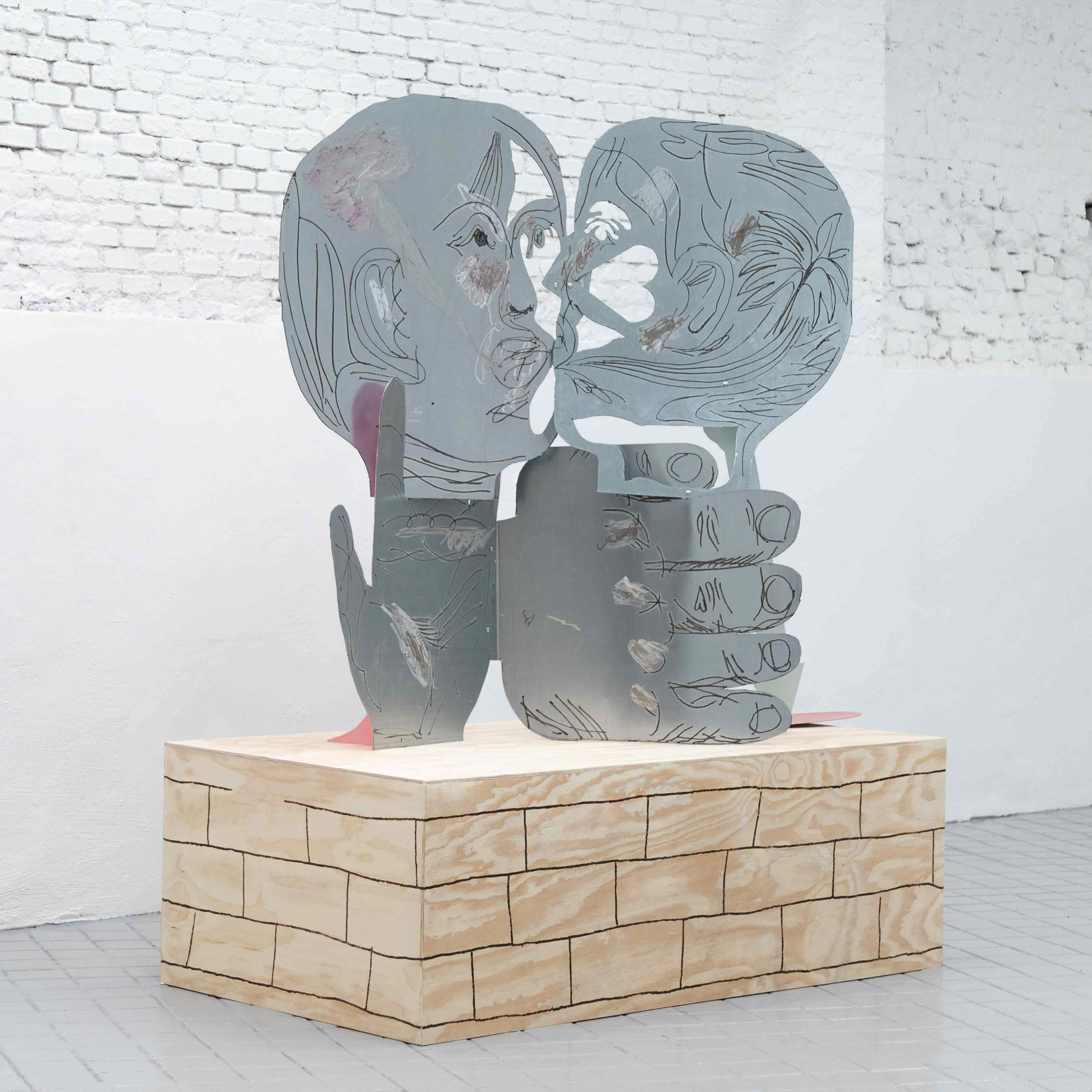
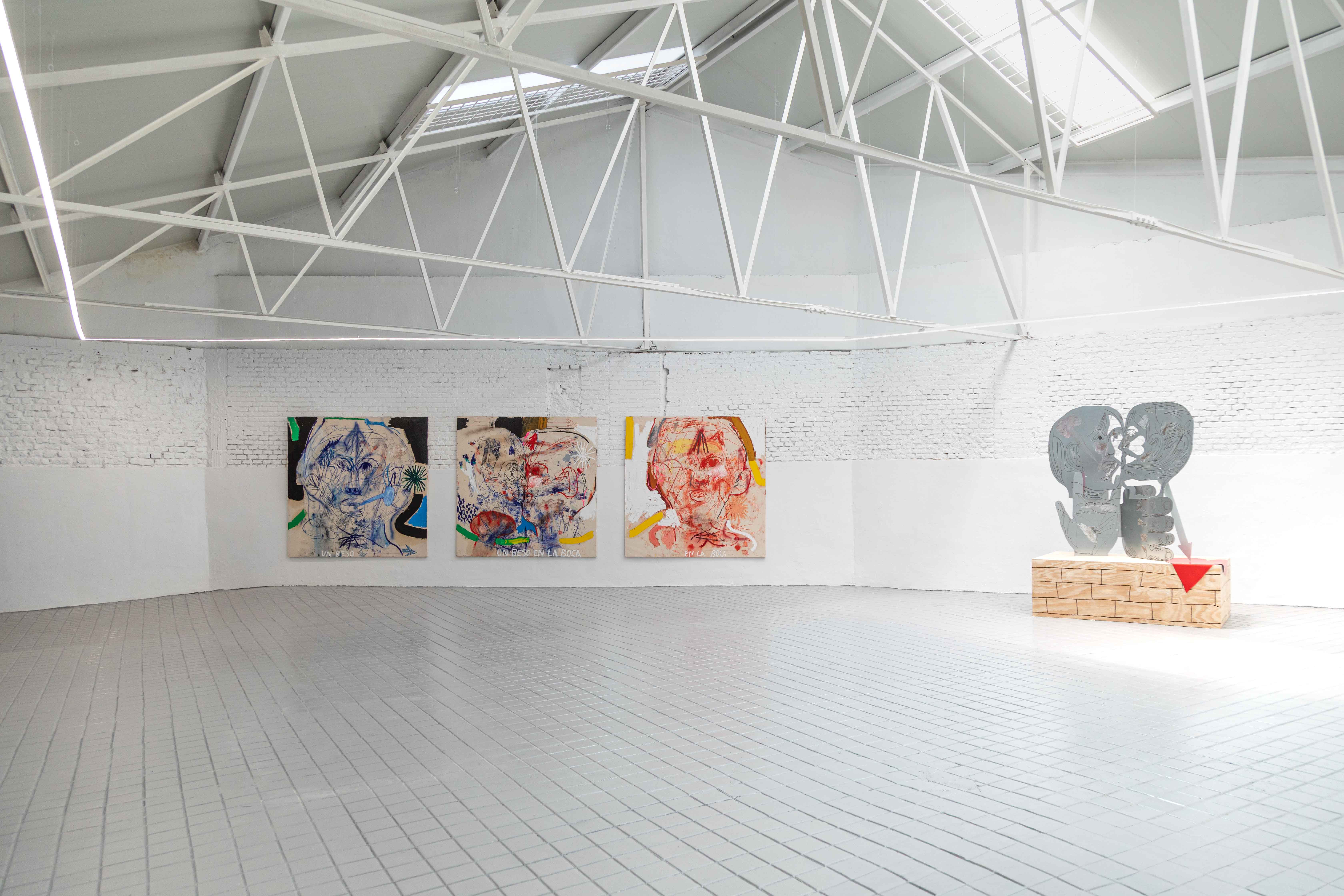
That said, the scenes of this series contain images of intimate relationships or situations of intimacy. Authentic bed scenes that share the expression of bonds, relationships between people or even animals. Several pieces reproduce the idea of the kiss or some hugs, a more physical contact, and a crossing of contradictory situations (the impossible meeting of two figures by a wall, in one of the sculptures)...
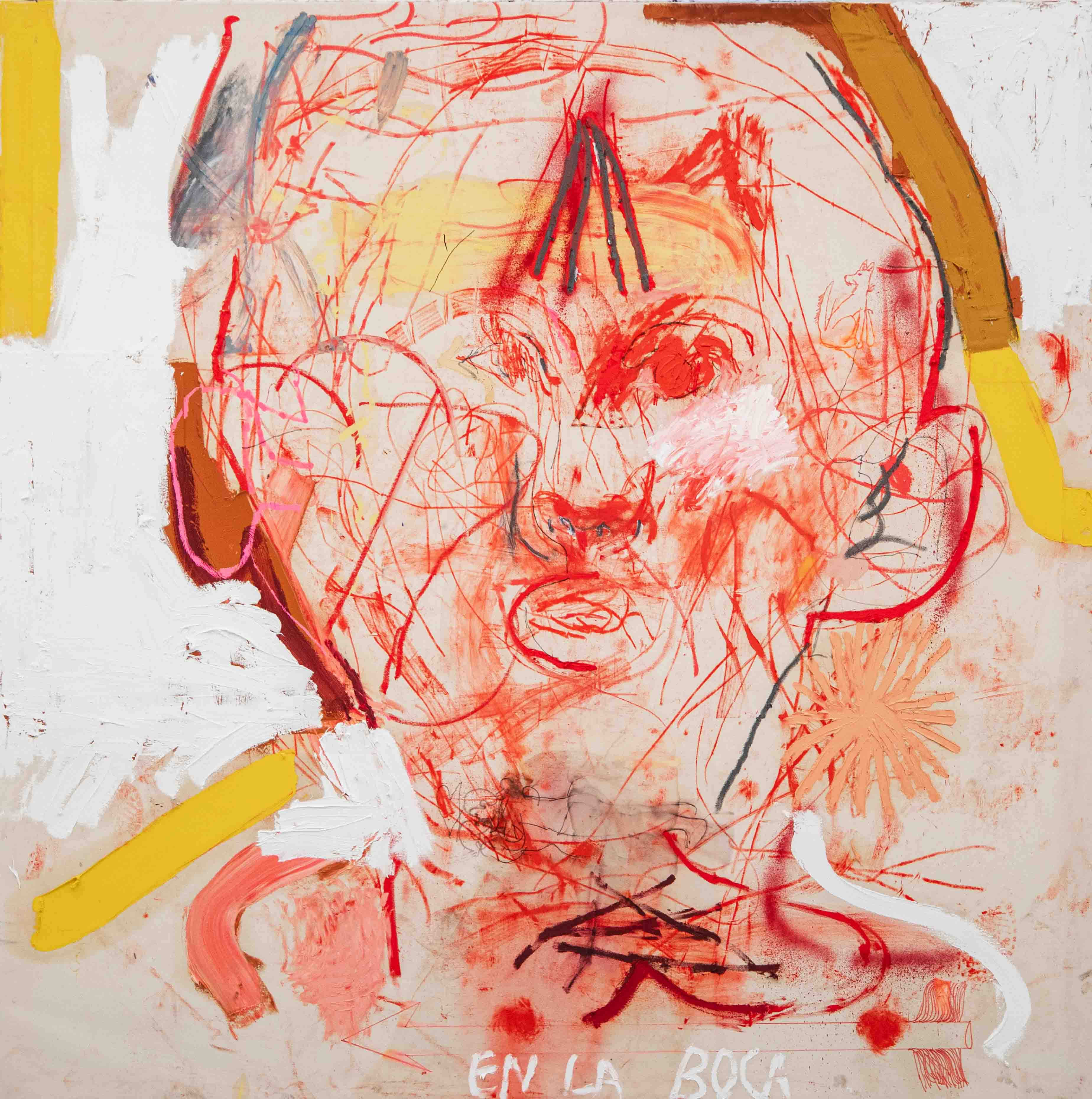
And in them, Manu plays with techniques, with materials, with the figure-background relationship. It reminds me that it was Chillida in his memoirs who considered how the craftsman always repeats the same formula to reach a similar result, perfected and polished, while the artist should feel obliged to abandon repetition to, instead of seeking the perfection of what is known, focus on the error of what is unknown or not controlled. It is the flight from the mechanical point or the perfect technological one. That is a more human attitude. And this is where our young creator finds himself, with solutions such as painting from the print, turning the painting upside down, mixing abstraction and figuration, denying the figure a background in perspective.... This gives rise to breaks in which small artistic events take place in which we do not recognize ourselves.
Stylistically, Manu Garcia's taste lies in variety. The attitude is that of playing with style, even if one is more akin to certain languages, to abstract expressionism (or figurative, which is better than nothing is clear). But in the background there is a lot of History of Spanish painting, more brutal brushstrokes, others more naive. If Matisse set out to test how far he could go with each stylistic resource, the Asturian breaks barriers and linearities, changes the rules, shatters the perspectives, and becomes more canonical when he wishes. He plays without pressure. It is a constant flight forward to understand the process as a continuum, as Picasso or Miró would implement, as opposed to the linearity of Frank Auerbach, whom he brings up, who develops one idea -and another, and another- in the same painting.
That is why, in Manu, an isolated work has a limited sense, because it must be understood as part of a continuum, where each piece provides information to another; where the large scales (with which he most enjoys, since in small formats the inks are loaded and the results are recharged) facilitate quieter spaces, a balance of styles and stories of more balanced consequences; where the sculpture is polychrome to generate reflections .... All this, without leaving the bed.
May, 2025